
Your Gauge Sheets Are Lying to You: A Field Data Audit Checklist Before Winter Hits
The Field Reality: Gauge Sheets Are Only as Good as the Pumper’s Last Trip
Every operator has heard some version of this text: “I will mail my gauge sheets by the end of the month.”
It sounds harmless. It isn’t.
A gauge sheet sitting in a truck cab, a clipboard, or a stack of papers on a pumper’s kitchen table is a data point frozen in time. It doesn’t update. It doesn’t flag itself when a tank reading looks off. And it doesn’t reach your office until someone remembers to drive it in, fax it, or mail it — sometimes weeks after the actual gauging happened.
By the time that data lands on a desk, it’s not a record of today’s production. It’s a guess about what happened three weeks ago.
This matters most right now, in September, for one simple reason: once freeze season hits, your margin for error shrinks fast. Missed gauges turn into missed downtime. Bad tank readings turn into bad allocation numbers that carry straight through to your RRC filings. The operators who run a clean field data audit before the first freeze are the ones who aren’t scrambling in December. The ones who skip it usually don’t find out their numbers were wrong until an auditor — or an investor — asks a question they can’t answer cleanly.
The Quantitative Impact: What a Bad Reading Actually Costs
A single mis-transposed tank reading looks small. It isn’t small once it moves downstream.
Here’s the chain reaction:
- A pumper misreads a tank level by a few inches, or a gauge sheet gets copied into the system days late.
- That reading feeds directly into your production report — the same report used to calculate oil and gas sales, injection and disposal volumes, and monthly totals.
- The error compounds into your run tickets, where gross barrels and adjusted net barrels are supposed to reconcile against your tank inventory.
- By month-end, your balance report doesn’t tie out. Someone in the office now has to manually hunt down where the discrepancy started — often across multiple leases and multiple pumpers.
That reconciliation work isn’t free. For a lot of small operators, it’s hours per week of an office employee cross-referencing paper against spreadsheets against whatever got faxed in late. That’s LOE you’re paying for without a single barrel of additional production to show for it.
And it gets worse in a regulated filing season. If your field data has quietly been wrong for weeks, your Texas RRC PR monthly submission inherits that error. Disposition codes built on bad allocation numbers don’t just cause an internal headache — they create real audit exposure.
Where Data Actually Breaks: 4 Common Failure Points
Before you can fix a data problem, you have to know where it’s actually coming from. In field operations, it’s almost always one of these four points.
1. Inconsistent tank readings between pumpers on the same lease.
Different pumpers, different habits. One rounds to the nearest half-inch, another eyeballs it. Multiply that inconsistency across a lease with several tanks and several rotating pumpers, and your “daily production” number becomes an average of guesses.
2. Missing or delayed run ticket entries.
Gross barrels, adjusted net barrels, opening and closing gauges — if a haul ticket doesn’t get entered same-day, you’re reconstructing a haul from memory a week later. That’s how “up-to-date run ticket information” turns into a scramble every time sales needs a number.
3. Field notes and comments that never leave paper.
A pumper notices something in the field — a spill, a leak, equipment acting up — and writes it on the back of a gauge sheet that sits in a truck for two weeks. Critical field context never makes it to the office in time to act on it.
4. Manual transcription errors between gauge sheet and production report.
Even when the field data itself is accurate, someone still has to key it into a spreadsheet or reporting system by hand. Every manual re-entry point is another chance for a transposed digit or a skipped row.
The SaaS Solution Workflow: Automated Cross-Checking Before It Reaches the Office
None of these failure points are unique to your operation. They’re structural problems with paper-based field reporting — and they’re exactly what automated cross-checking is built to catch.
An Error Report is designed to flag production mismatches and inconsistent tank readings automatically, before they get buried in a month-end reconciliation. Instead of an office employee manually comparing gauge sheets against run tickets, the system surfaces the mismatch as soon as it exists — while it’s still a same-day fix instead of a month-old mystery.
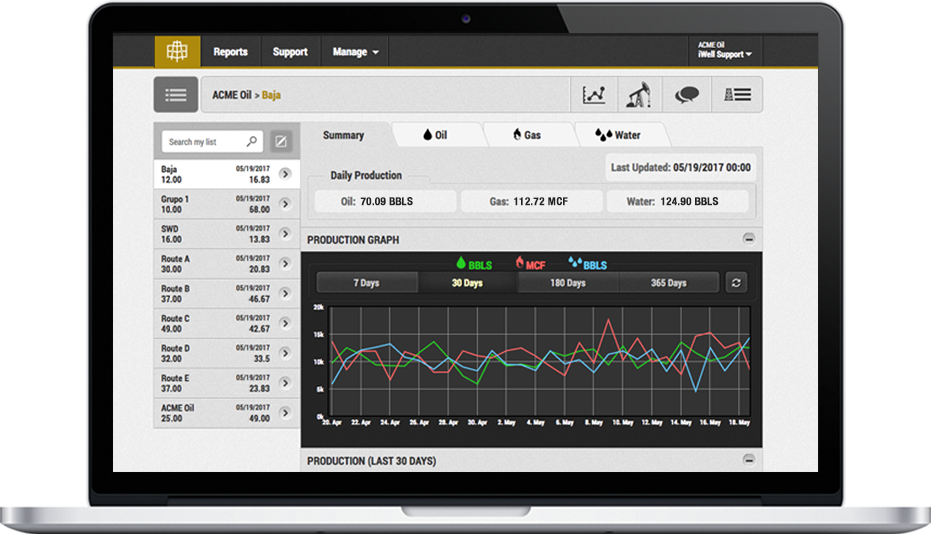
A Gauge Sheet Report goes further, consolidating total oil, gas, and water production, individual tank and meter readings, run ticket data, and field comments into a single daily record. That means the tank stock, the haul information, and the pumper’s field notes all live in one place — not scattered across a truck cab, a fax machine, and three different spreadsheets.
The result is same-day visibility instead of end-of-month archaeology. When a pumper enters a reading in the field, the system checks it immediately. When something doesn’t reconcile, you know that day — not three weeks later when you’re trying to close out a monthly report against a filing deadline.
Actionable Takeaways: Your Pre-Winter Field Data Audit Checklist
Run this checklist in September, while you still have the runway to fix problems before winterization adds its own layer of complexity.
Pull the last 30 days of gauge sheets and cross-reference them against your run tickets for gaps or mismatches.
- Run an Error Report across all active leases to catch production mismatches and inconsistent tank readings before they compound.
- Confirm every pumper is logging tank readings on the same cadence — daily, at the same time of day, using the same method.
- Verify comments and field notes are captured digitally, not left on paper where they won’t reach the office until it’s too late to act.
- Set a recurring weekly Error Report schedule heading into October, so mismatches get caught same-week instead of same-quarter.
- A clean data audit in September isn’t glamorous work. But it’s the difference between walking into winterization season with numbers you trust, and walking into it hoping nobody asks too many questions about last month’s tank stock.
Ready to see what same-day field data actually looks like? Schedule a live demo of automated field-to-report reporting.