
Remote Monitoring for the Oilfield: What It Replaces, What It Costs, and What It’s Not
Remote monitoring for the oilfield is the practical fix for a problem every SMB operator already knows: your only visibility into a tank battery is the moment a pumper happens to be standing next to it. Everything in between — the 23 hours a day nobody’s on site — is a blind spot. This piece breaks down what remote monitoring actually replaces on your route, what it costs to get running, and where it fits against a full SCADA build.
The Manual Baseline: Why Operators Are Looking at Remote Monitoring for the Oilfield in the First Place
Most independent operators are still running the same process that’s worked for decades: a pumper drives the route, climbs the tank, drops a gauge line, and writes down a number. It’s a sampling process, not continuous monitoring. You get one data point a day — maybe two — and you make decisions based on what the tank looked like hours ago, not what it looks like right now.
That gap is exactly what remote monitoring for the oilfield is built to close. Instead of a single daily reading, sensors on the tank, meter, and pressure points report continuously, so the office has current data without waiting for the next scheduled stop.
Where the Blind Spots Actually Show Up
The gaps that matter most are the ones nobody’s watching for: overnight fill rates on a well that started producing more water than expected, a pressure creep on a separator over a weekend, or a tank getting close to capacity while the pumper’s route has three more stops before it circles back. None of these show up until the next physical check — unless something is watching in between.
What Remote Monitoring for the Oilfield Actually Looks Like at the Wellhead
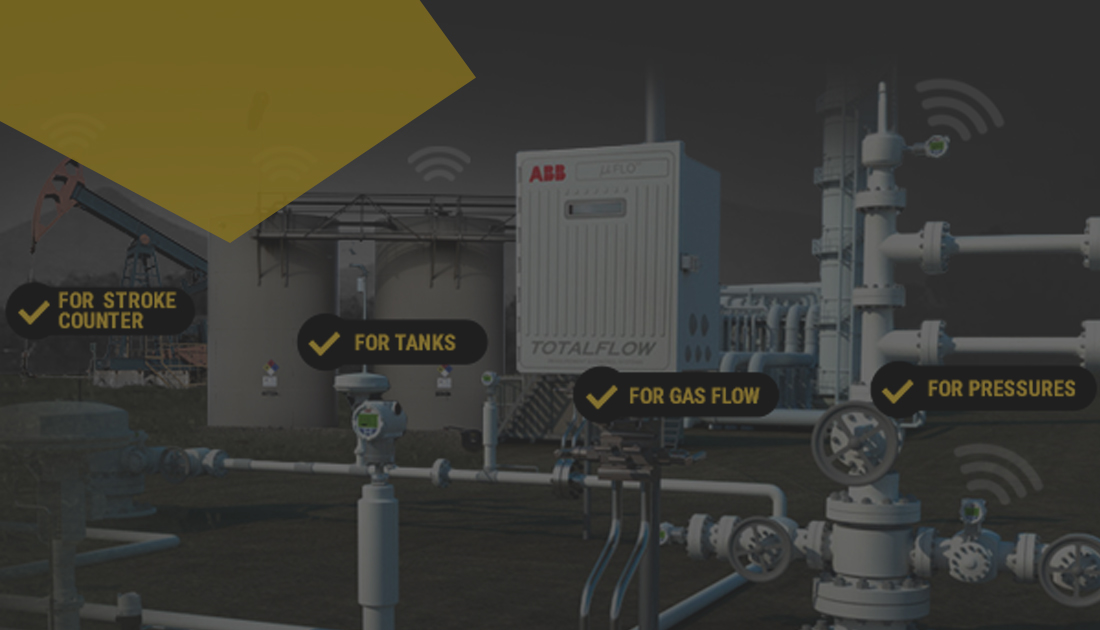
“Remote monitoring” covers a specific, concrete set of hardware: tank level probes, stroke counters, pressure transducers, and gas flow sensors, all reporting back on a set interval.
Reading frequency matters more than the sales pitch suggests. Some systems poll once an hour; better field-hardened units capture readings every 15 minutes, which is the difference between catching a fast-filling tank and finding out about it after the fact. When you’re evaluating vendors, ask for the actual polling interval — “real-time” gets used loosely.
Power and connectivity are the two questions that separate field-ready hardware from lab-tested hardware. Solar-powered units remove battery replacement from your maintenance list entirely. Just as important: confirm the system transmits data without requiring cellular or internet coverage at the wellsite itself — a lot of remote pads simply don’t have it, and hardware that assumes they do will leave you with gaps exactly where you need coverage most.
Remote Monitoring for the Oilfield vs. Full SCADA: Picking the Right Scope
SCADA makes sense for larger, wired assets with the infrastructure and budget to support it. But for a 20–100 pad SMB operation, a full SCADA buildout is often more system than the asset base needs. Lightweight remote monitoring — probes, a solar-powered comms box, and cloud-based alerting — gets you the same core benefit (continuous visibility) at a fraction of the deployment time and capital outlay. If your pain point is tank overflows and missed pressure excursions rather than integrated process control, this is usually the right-sized tool.
The Alert-to-Action Loop
Continuous data only matters if someone acts on it. When a tank approaches capacity or a pressure reading drifts outside its normal range, the system should push an alert by text or email — routed to whoever needs to act, whether that’s the pumper on route, the field superintendent, or the compliance desk. That routing decision is worth configuring deliberately: an alert that only reaches one inbox at 2 a.m. isn’t much better than no alert at all.
From Sensor Data to Compliance-Ready Reports
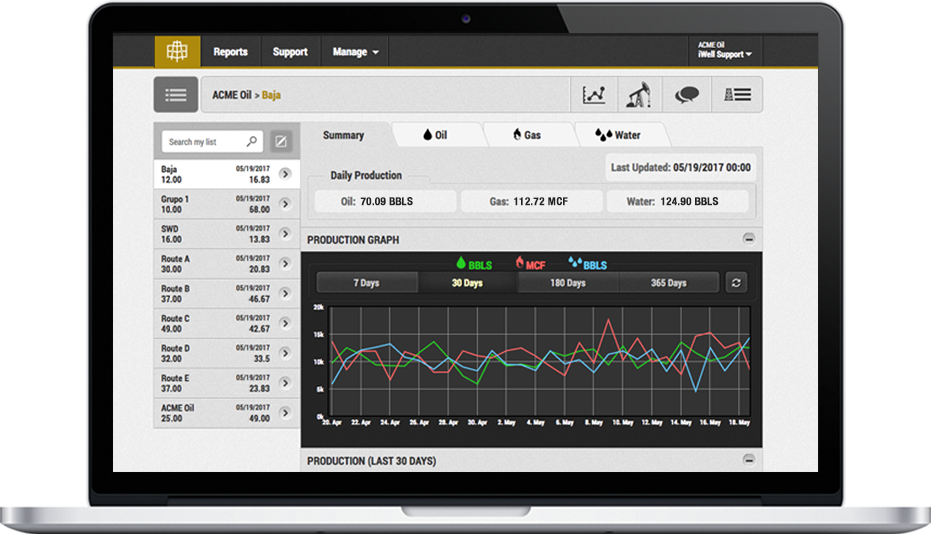
The real payoff of remote monitoring for the oilfield shows up in the office, not just the field. Readings should flow directly into your existing reporting stack instead of requiring manual re-entry:
- A Gauge Sheet Report rolls up total oil, gas, and water production alongside individual tank and meter readings, stock per tank, and run ticket detail.
- A Readings Report shows hourly tank and meter readings and current stock pulled straight from the monitoring hardware.
- A Gas Report auto-populates monthly gas data from the same monitoring feed.
Installation Reality: What It Takes to Get Live
Getting remote monitoring for the oilfield running on an existing tank doesn’t require new construction. In practice, the install is three steps:
- Mount the probe. Screw the reducer into the tank accessory port (skip this if the port is already 2″), then lower the probe through it and secure the assembly.
- Mount the communication box. Attach it to the probe assembly with the solar panel facing south for consistent charging.
- Connect and calibrate. Wire the probes to the box, wake the unit, then gauge the tank manually once to record a baseline level and time for calibration.
Most single-tank installs are a same-day job for a two-person field crew.
Cost Structure: Upfront Purchase vs. No-Upfront-Cost Models
Some remote monitoring programs are sold as a capital purchase; others are structured with no upfront equipment cost, shifting the expense into an ongoing service fee. Which one makes sense depends on your cash flow position and whether you’d rather own the hardware outright or avoid the capital outlay entirely. Either way, get the total cost of ownership over 3–5 years before comparing, not just the sticker price on day one.
Evaluation Checklist for Remote Monitoring for the Oilfield
Before signing with a vendor, confirm:
- Connectivity: Does it actually work without cellular or internet coverage at the pad, or only “usually”?
- Reading interval: What’s the real polling frequency — 15 minutes, hourly, or something vaguer?
- Alert routing: Can thresholds and recipients be configured per tank, per pressure point, and per role?
- Reporting integration: Does sensor data flow automatically into your Gauge Sheet, Readings, and Balance reports, or does someone still re-key it?
- Power: Is it solar, and is the panel sized for your latitude and typical cloud cover?
- Cost model: Upfront purchase or no-upfront-cost service fee — and what’s the 3–5 year total cost either way?
- Install complexity: Can your existing field crew install it, or does it require a specialty contractor?
Remote monitoring for the oilfield doesn’t eliminate the need for a pumper on the ground — someone still has to calibrate sensors and do periodic physical checks. What it eliminates is the blind spot between visits, which is where spills, missed hauls, and compliance gaps actually happen.
Ready to see what same-day field data actually looks like? Schedule a live demo of automated field-to-report reporting.