Well count is a weak proxy. A 15-well company with a busy SWD and a compressor station may need SCADA on those facilities. A 80-well conventional stripper book may never justify a controls buildout on every battery—and still benefit enormously from tank and pressure alerts.
When SMB operators typically need SCADA
SCADA pencils when per-site complexity and downtime cost outweigh the capital, integrator, and ongoing controls load. Patterns that show up repeatedly for independents:
- Compressor stations — sequencing, load control, shutdown logic, and fast reaction to process upsets
- Saltwater disposal / injection facilities — pumps, tanks, pressures, and safety interlocks that shouldn’t wait for the next drive-by
- Gas plants and treating facilities — multi-loop process control and continuous oversight
- High-rate or high-value pads — where hours of unplanned downtime or a missed shut-in carry outsized cost
- Artificial-lift optimization loops — plunger, ESP, or gas-lift programs that actively change setpoints from supervisory software
- Safety-critical instrumentation — H2S, ESD trains, and other protective systems that belong in a designed controls architecture
Cloud-native SCADA vendors pitch lower total cost of ownership for independents by reducing on-prem host hardware and some integrator friction. That’s a real category shift—but it remains a control platform. It is not the same purchase as a tank-level monitor with text alerts.
If your pain is “we can’t see tank height until the pumper gets there,” you’re usually not in SCADA territory yet. If your pain is “we need the facility to shut itself down and we need to command equipment remotely,” you are.
When light cellular remote monitors are the better fit
Light remote monitors fit the sites where full SCADA never penciled—or where legacy SCADA has become a maintenance drag for little remaining control value.
Common SMB cases:
- Conventional wells and tank batteries where the daily problem is overflow risk, haul timing, and pressure excursions between visits
- Aging SCADA on stripper or low-complexity sites that mostly sits unused while still generating support and cellular/radio bills
- Routes where LOE and spill exposure come from blind spots, not from missing remote valve control
- Teams that already have (or want) solid pumper capture and production reporting, and need sensors to feed that stack instead of a separate control room
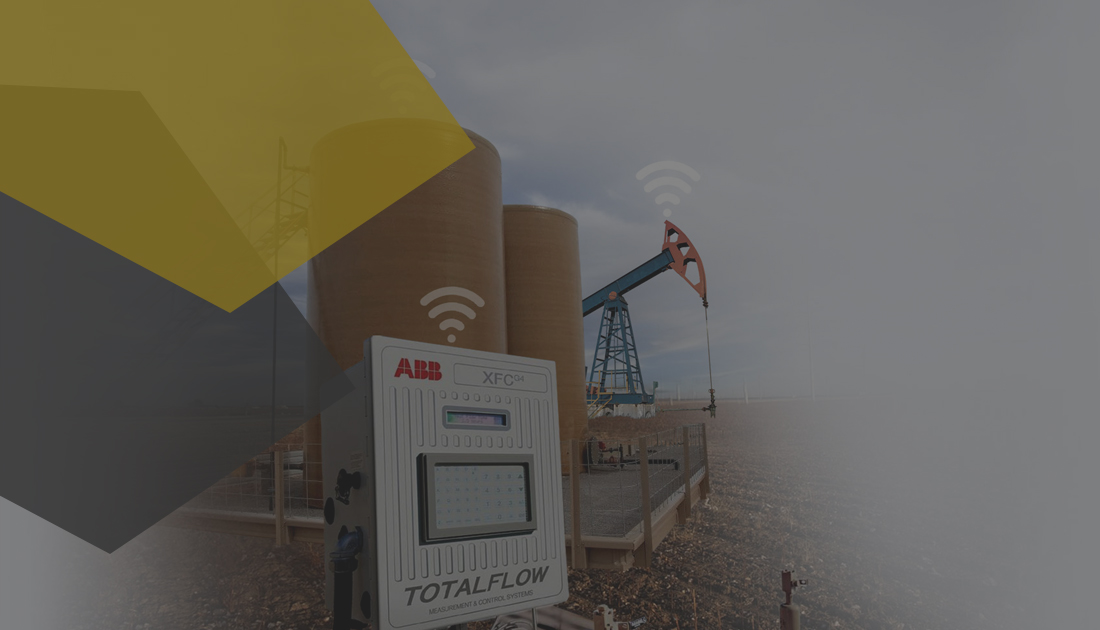
Relevant measurement classes for this category include tank level/volume, casing/tubing/line/injection pressure, pump-jack stroke/SPM, and EFM reads. Products in this lane—including iWell Remote—are built around scheduled reads, dashboards, and text/email alerts. They are not a substitute for facility PLC/RTU control.
Two honesty checks that keep projects from failing later:
- Monitoring does not replace pumpers. Someone still calibrates, verifies, and responds. Sensors close the gap between visits; they don’t eliminate the lease operator.
- Cellular is site-specific. Many modern light monitors use carrier cellular (for example, AT&T or Verizon on iWell Remote units). That works on a large share of pads—and fails on others. Check coverage at this location before you assume a fleet-wide rollout.
Cost and ops burden: how to compare apples to apples
Comparing SCADA and light monitors on “monthly fee” alone will mislead you. Build a 3–5 year view with the same line items on both sides.
SCADA-side line items to include
- Field hardware and actuators (not just transmitters)
- PLC/RTU programming and panel work
- Integrator / controls engineering
- Communications (radio, cellular, or other backhaul)
- Host license or cloud SCADA SaaS
- Ongoing controls tech time (alarm tuning, logic changes, failover)
- Training and spare strategy
Light remote-monitor line items to include
- Sensor/hardware (purchase or bundled in subscription)
- Install labor (often field-crew feasible)
- Cellular/data (sometimes included in the service fee)
- Subscription / SaaS
- Alert configuration and who owns response
- Integration into daily production reporting (manual re-key vs automatic feed)
iWell commercial framing is published as low as $35/month, with no upfront equipment, cellular, or install fees in the current on-page model, readings up to every ~15 minutes (up to 4/hour), solar power, AT&T or Verizon cellular, and Class I Div I & II certification. Use that as category context for light monitors—not as a claim that every site should choose that model.
Whatever vendor you evaluate, force the same TCO window. Capex-heavy SCADA can look expensive on day one and still be correct for a disposal facility. Subscription monitors can look cheap monthly and still be wrong if you needed ESD logic.
Hybrid stacks: SCADA where it pays, monitors on the long tail
Many healthy SMB operations already run both—whether or not they call it a strategy.
A practical pattern:
- Keep (or deploy) SCADA / cloud SCADA on compressors, SWDs, plants, and other high-complexity facilities
- Put light remote monitors on conventional tank batteries and wells where the job is visibility and alerts
- Keep pumper field capture in the loop for observations sensors don’t replace (odors, leaks you can smell, valve positions that aren’t instrumented, narrative notes)
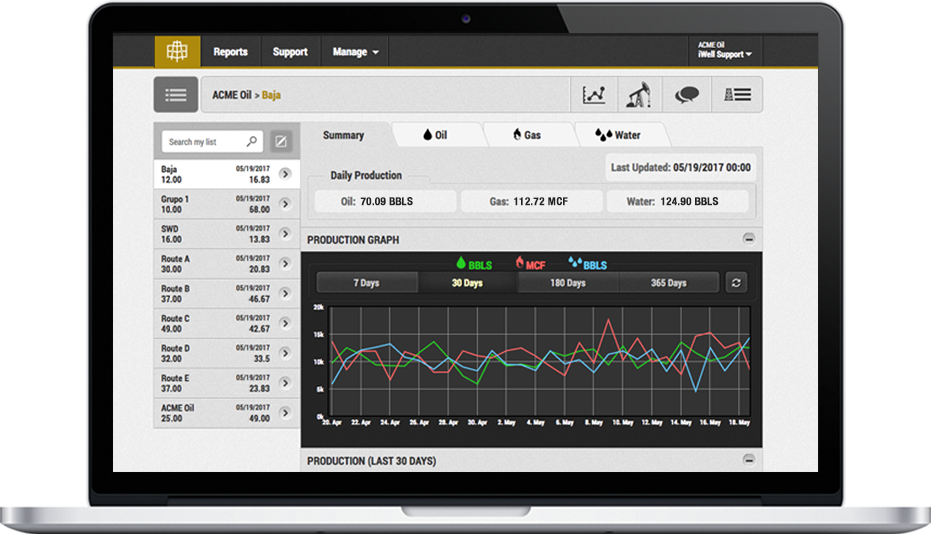
Category vendors often describe this as “SCADA plus phone-first monitoring.” iWell’s suite framing is similar in spirit for the visibility side: Remote monitors feeding iWell Reports / Connect alongside iWell Pumper field workflows—without pretending the monitors are a controls platform.
Watch for dashboard sprawl. The hybrid stack fails when alerts land in three unread portals and nobody owns response. Route exceptions to people who can act—pumper, lead, or superintendent—and make sure sensor data lands in the same production reporting path the office already trusts.
A practical buyer checklist (before you sign a PO)
Use this per site or per asset class. For a deeper remote-monitoring vendor checklist (polling interval, install reality, reporting feed), you can take a look at our previous post and extend it with the SCADA-specific items below:
Control vs. Visibility
- Do we need remote start/stop, valve control, ESD, or setpoint logic on this site? (Y → SCADA path)
- Or do we need tank/pressure/runtime visibility and alerts between visits? (Y → monitor path)
Economics and risk
- What’s the cost of a 12–24 hour blind spot here (spill, missed haul, downtime, compliance scramble)?
- Does facility complexity justify integrator + ongoing controls budget over 3–5 years?
People and process
- Who receives alerts at 2 a.m., and who is authorized to act?
- Do we have (or want) staff to maintain SCADA logic and alarm philosophy—or only to respond to exceptions?
Site realities
- Cellular coverage checked at this pad (not assumed from the office Wi-Fi story)?
- Power plan for solar/winter performance at this latitude?
- Hazardous-area rating required (e.g., Class I Div I/II)?
SCADA-specific add-ons (if leaning control)
- Integrator scope written down (I/O list, ESD ownership, FAT/SAT, as-built docs)?
- Alarm philosophy: who tunes nuisance alarms so operators don’t mute everything?
- Ongoing controls budget line (not just year-one install)?
Visibility-stack add-ons (if leaning monitors)
- Does data flow into daily production reporting without re-keying?
- Can thresholds and recipients be set per tank / per pressure point?
- Can existing field crew install, or is specialty labor required?
Map the answers site by site. The spreadsheet that results is more valuable than any single vendor demo.
Closing: pick the tool that matches the job
SCADA is control. Light remote monitors are visibility. Most SMB operators don’t need a control-room platform for every tank battery—and shouldn’t under-buy when a disposal facility or compressor station truly needs supervisory logic.
Walk your asset list with the control-vs-visibility question, price both paths on a 3–5 year TCO basis, and design a hybrid where the economics diverge. If you’re still sorting what remote monitoring replaces on a conventional route, start with the oilfield remote monitoring overview. If you want to see how a read-and-alert monitor fits a specific pad, iWell Remote publishes a 30-day test-drive option on the product page—useful for validating coverage and alert routing before you scale.
Map the sites first. The PO gets easier after that.
Ready to see what same-day field data actually looks like? Schedule a live demo of automated field-to-report reporting.